Why Community Has Always Been at the Heart of Australian Housing and Why That’s More Relevant Than Ever
5 min read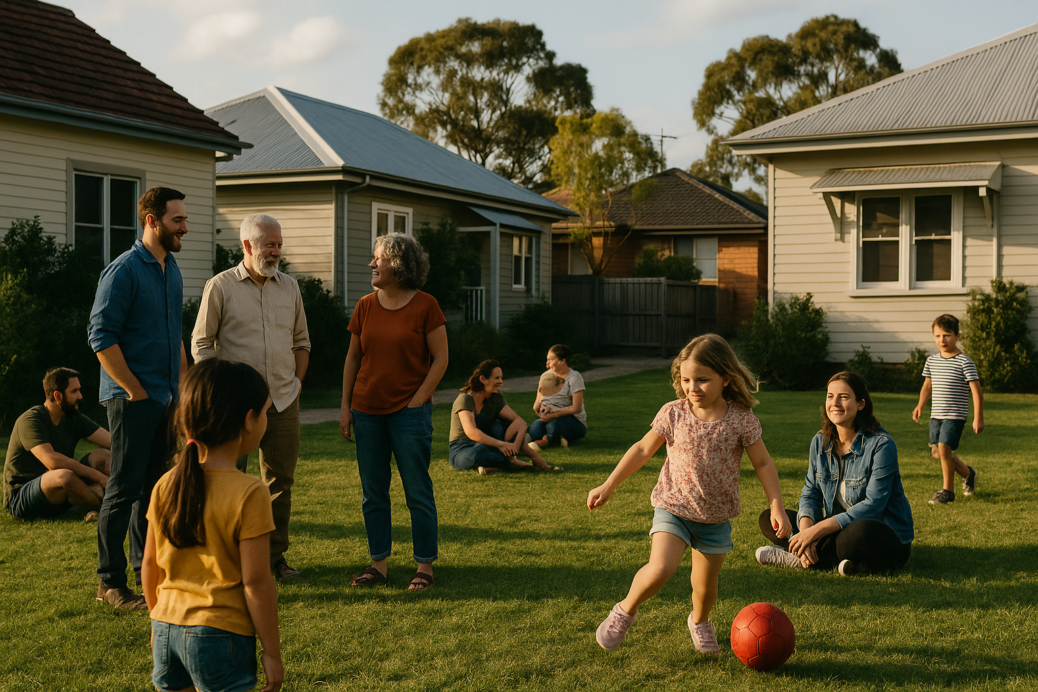
Key takeaways
While interest rates, values, and clearance rates still matter, community is an often overlooked but powerful force shaping long-term property performance.
A strong sense of place and connection is becoming more important to buyers and renters alike.
Some new developments now prioritise shared spaces, green areas, and local hubs over just lot sizes and road layouts.
This reflects a shift from top-down design to people-centred planning.
Australia has always been a nation that values connection, and this is now evident in our housing.
Sure, most of the media commentary focuses on property values, interest rates, and auction clearance rates.
And while those metrics are obviously important for us as investors, there’s a more fundamental force quietly shaping our cities and influencing long-term capital growth that investors need to understand, and that is: community.
It’s a timeless idea, but one that’s now evolving in a very modern way.
Today, community isn’t just something you hope to find in a suburb; it’s being deliberately designed into the very fabric of our new neighbourhoods.
So let’s take a closer look at how the idea of community has shaped Australian housing in the past, and why it’s becoming more critical to our property decisions than ever before.
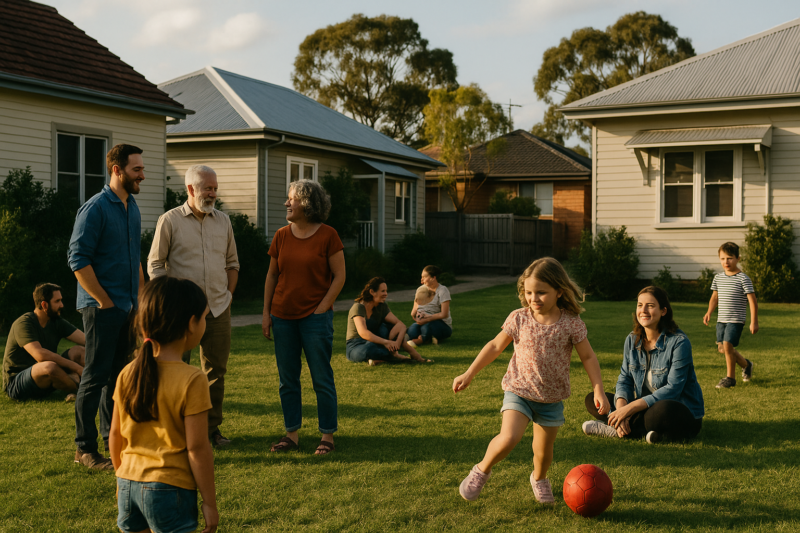
From quarter-acre blocks to connected living
Once upon a time, the great Australian dream was all about the quarter-acre block: a detached home on the city fringe, often separated from real amenities and entirely dependent on the car.
It was a symbol of aspiration and ownership, but in hindsight, many of those neighbourhoods were physically isolated.
There was privacy, yes, but not necessarily connection.
Today, we’re seeing a decisive shift.
Homes are becoming smaller and denser, but the surrounding environment is becoming more important.
People are placing greater value on what’s available outside their front door: parks, walking trails, cafés, schools, and a sense of local vibrancy.
It’s no longer just about having a house. It’s about living in a place, a neighbourhood that supports lifestyle, health, convenience, and social connection.
Masterplanned communities are being reimagined.
The way new suburbs and housing estates are being developed is changing, and in a good way.
Where earlier developments focused heavily on lot sizes and road layouts, today’s masterplanned communities are being shaped by community values.
We’re seeing smarter, more intentional planning that puts green spaces, playgrounds, local centres, and shared spaces at the heart of the neighbourhood.
This isn’t just a design choice, it’s a response to what buyers are actually seeking.
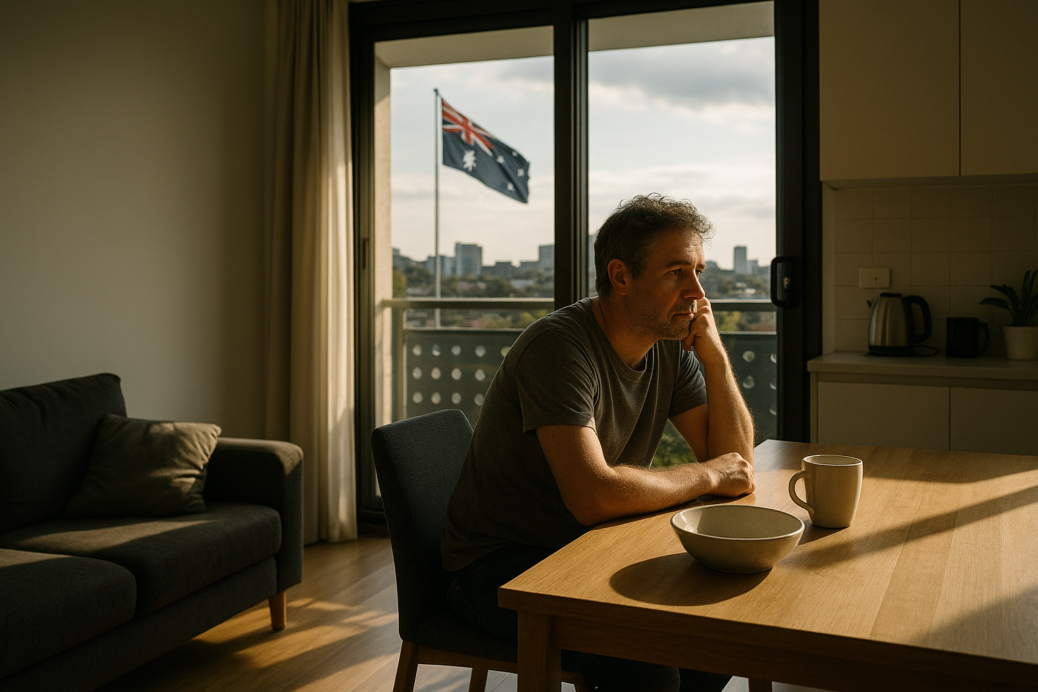
In an age of digital fatigue and post-pandemic disconnection, Australians want to live somewhere they feel part of something bigger than just their four walls.
And that presents a huge opportunity, both for developers who get it right and for investors who understand how this kind of social infrastructure supports property demand.


Are you thinking of upgrading your home in near future?
Metropole has been helping Australians by their next home for over 30 years.
Trust our unrivaled and proven experience.
The rise of the 20-minute neighbourhood
One of the most significant planning trends today is the emergence of the 20-minute neighbourhood, where residents can access most of their daily needs within a short walk or bike ride from home.
It’s a concept that ticks a lot of boxes:
-
It reduces commute stress
-
Encourages local spending
-
Improves walkability
-
And most importantly, it helps foster genuine community interaction
This model is increasingly being built into the DNA of new developments.
And it aligns well with how people want to live today, especially families, downsizers, and young professionals who want convenience without sacrificing quality of life.
From an investment point of view, these neighbourhoods are incredibly resilient.
They retain value in downturns, they’re more appealing to long-term renters, and they often enjoy a higher rate of capital appreciation over time.
Walkability is the new location metric.
We’ve all heard the saying: location, location, location.
But in today’s market, walkability is just as powerful a value driver.
People want to live in places where they can comfortably walk to the local café, school, park, or even just the corner shop.
But walkability isn’t just about geography, it’s about design.
Shaded pathways, safe pedestrian crossings, ample seating, thoughtful landscaping- these features make walking not only possible, but pleasant.
And when you make it easier for people to spend time outdoors, they’re more likely to engage with their neighbours, support local businesses, and develop a stronger attachment to the area.
In fact, research consistently shows that residents in walkable neighbourhoods are more physically active, socially connected, and report higher levels of life satisfaction.
That matters. Because happy residents are sticky residents, and sticky residents are good news for long-term property values.
Another major shift we’re seeing is the move toward community-led development.
Rather than imposing a one-size-fits-all design from the top down, progressive developers are now involving residents from the outset.
This means inviting locals to help shape public spaces, provide feedback on infrastructure, and even co-create community events or initiatives.
It’s a more collaborative model, and it works.
When people feel they have a stake in shaping their environment, they’re more invested in its success.
They’re more likely to participate, take pride in their neighbourhood, and support local improvements.
Some developers are even offering grants to support grassroots projects, running local sporting events, or supporting residents’ associations, not just as a PR strategy, but as a way to foster genuine social cohesion from day one.
What does it all mean for property investors?
It means the most successful long-term property plays won’t just be in the suburbs with the best infrastructure, but in communities that offer a complete living experience.
Here’s what I recommend you look for:
-
Suburbs with clear urban planning and masterplans that prioritise walkability and green space
-
Developments that include or are near cafés, parks, schools, and local retail
-
A strong emphasis on public interaction zones, not just housing density
-
Signs of resident engagement and a well-run community development program
These are the areas that will attract long-term owner-occupiers, create demand from tenants, and perform well over the next property cycle, regardless of short-term market noise.
Final thoughts
The idea of community in Australian housing is nothing new, but its importance has never been more central to both how we live and how we invest.
As our cities evolve, it’s clear that people are searching for more than just affordability or proximity.
They want a sense of place. They want belonging. They want the real Australia, not just a house, but a home within a community.
And the best part? The suburbs and developments that get this right will outperform. Not just in lifestyle but in value.
So next time you’re looking at a property, don’t just ask what the house is worth.
Ask what the neighbourhood is worth.
Because that’s where the real long-term value lies.