What Happens if You Die Without a Will?
5 min read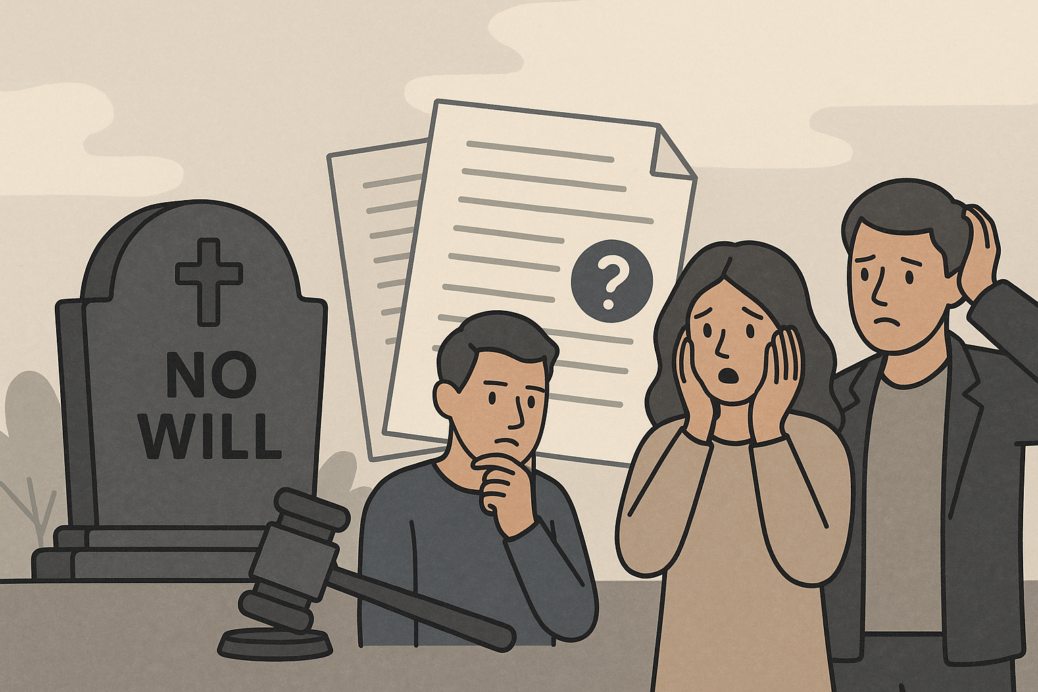

Key takeaways
Many Australians wrongly assume things will “work themselves out” after death.
Without a valid Will, you’re considered to have died intestate, and your estate will be distributed by a government formula—not your personal wishes.
This can lead to confusion, delays, disputes, and financial inefficiencies.
Creating a proper estate plan is not just about distributing wealth—it’s about leaving your loved ones with clarity, protection, and peace of mind.
Death is never an easy topic to talk about, but planning for it is one of the most important things you can do for your loved ones.
A lot of Australians assume that everything will just “work itself out” when they’re gone—but unfortunately, that’s far from the truth.
Without a valid Will in place, you leave behind a legal mess, unnecessary costs, delays, and potential conflict.
It’s called dying intestate—and it can create serious complications for your family and your estate.
Let me walk you through exactly what happens when someone passes away without a Will, and why having one is a non-negotiable part of responsible wealth planning.

What does it mean to die intestate?
If you die without a valid Will, the law decides what happens to your estate, not you.
Each state and territory in Australia has its own rules about how your assets are distributed if you die intestate.
This means your money, property, investments, and even personal items may not go to the people you would have chosen.
Instead, they’ll be distributed according to a government formula, which doesn’t take into account the nuances of your personal relationships, financial responsibilities, or intentions.
In most cases, your spouse and children will be first in line.
But if you’re in a blended family, have estranged relatives, or want to leave assets to friends, charities, or other beneficiaries, they could miss out entirely.
Who handles your estate?
When you have a valid Will, you nominate an executor – a trusted person who ensures your wishes are carried out.
But if you die without one, someone (usually a close family member) has to apply to the court to be appointed as the administrator of your estate. This process can be costly and time-consuming.
The court then issues what’s called “Letters of Administration”—a legal document that allows the administrator to manage and distribute your estate.
This may sound straightforward, but in practice, it often leads to unnecessary delays, legal costs, and sometimes bitter disputes—especially in families where communication is already strained or there are multiple potential beneficiaries.
Who gets what?
As mentioned, each state has its own hierarchy for distributing assets when someone dies intestate.
But here’s a rough guide:
- If you’re married (or in a de facto relationship) and have no children, your spouse typically inherits everything.
- If you have children, the estate is usually divided between your spouse and children. In some states, the first portion goes to your spouse, and the remainder is split.
- If you’re single with no kids, your estate might be distributed to your parents, siblings, or even more distant relatives.
- If no eligible relatives can be found, your estate may go to the state government.
This system can cause real heartache.
For example, stepchildren and long-term partners who weren’t legally recognised might receive nothing.
Or family members you hadn’t spoken to in decades could benefit ahead of those you cared for most.
No will = more tax, more risk
An often-overlooked consequence of dying intestate is the potential tax impact.
Without clear instructions, your estate may not be structured in the most tax-efficient way.
For instance, beneficiaries might lose access to testamentary trusts, which can reduce tax on inherited income, especially important if minor children are involved.
Also, assets may need to be sold quickly to finalise the estate, leading to capital gains tax liabilities or poor financial outcomes.
Then there’s the emotional toll.
Without a Will, the legal limbo can drag on for months – sometimes years – while your loved ones are grieving.
It’s the last thing they need.
Protect your loved ones: get a proper estate plan
Creating a Will isn’t just about who gets what.
It’s about protecting your family, avoiding unnecessary stress and costs, and ensuring that your wealth, what you’ve spent a lifetime building, is transferred smoothly and according to your wishes.
But a Will is just one part of a proper estate plan.
An effective plan will also include:
- Powers of attorney and guardianship arrangements
- Testamentary trusts to protect your children’s inheritance
- Structures to reduce tax for beneficiaries
- Asset protection from divorce, bankruptcy, or legal action
- Clear directions for business succession if you’re a business owner
At Metropole Wealth Advisory, we help successful Australians develop holistic estate plans that go far beyond a simple Will.
Our aim is to help you preserve, grow, and pass on your wealth in a safe and tax-effective way, giving you peace of mind and giving your family the protection they deserve.
If you’re looking for professional strategic wealth advice from a team of proven experts, please leave us your details here and let’s have an obligation-free chat to see how we can help you.
Metropole Wealth Advisory is a unique team of wealth creation, asset protection, tax, property and business specialists, the likes of which you probably have never come across before.
Final thoughts
You can’t predict the future, but you can plan for it.
If you’ve been putting off writing a Will or creating an estate plan, now’s the time to act.
The cost of doing nothing is far greater than the cost of doing it properly.
And the greatest gift you can leave your loved ones isn’t just your assets—it’s clarity, direction, and the confidence that they’ll be taken care of.