
Rigid Flex PCBs for a Wide Variety of Applications
2 min readRigid Flex PCBs
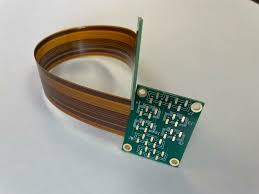
Rigid Flex PCBs have found their way into a wide variety of engineering applications. They’re perfect for situations that require a certain level of durability and flexibility, especially when space is limited. Whether you’re designing military missile guidance systems or medical imaging equipment, rigid flex provides the reliability you need. Rigid flex is a circuit board that incorporates both rigid and flexible substrate materials, resulting in an assembly with both high performance and a compact form factor. These boards are used in many electronics devices due to their usefulness, reliability and flexibility. The manufacturing process of a rigid-flex PCB requires special consideration to manage the multi-layer integration and connections between rigid and flexible sections.
Rigid flex circuits combine the best of both worlds: rigid boards offer stability, while a flexible polyimide ribbon gives you the freedom to bend, stretch, compress, and twist the board without affecting the circuitry inside. They also offer improved thermal resistance, and their encapsulated construction eliminates exposed interconnections that could be compromised by moisture or dust.
Creating a rigid flex PCB is a complex process, and requires close cooperation between design engineers and fabricators/assemblers. The mechanical rules are more complex than for a traditional rigid PCB, and many designers find themselves struggling to understand all of the variables involved. In addition, the layer stackup needs to be carefully considered, as it will impact both electrical and mechanical performance.
Rigid Flex PCBs for a Wide Variety of Applications
For example, it’s important to select the proper materials for both the rigid and flex sections of the board. Different materials have varying thermal expansion coefficients, and these can lead to reliability issues when the flex section undergoes changes in temperature. It’s also crucial to determine the correct flex bend radius, as using too small of a bend radius can lead to mechanical failure and signal integrity issues.
Another key challenge is managing heat dissipation. Rigid-flex circuits are typically made of FR-4 for the rigid and FR-32 for the flex sections, and it’s important to ensure that the layers are properly bonded together to prevent thermal stress. In addition, avoiding sharp corners and reinforcing flex areas can help to improve the overall durability of the flex circuit.
As the use of rigid flex circuits continues to expand, more companies are turning to Epec for design and assembly services. We’re able to work closely with our customers throughout the entire process, which helps to avoid problems that can delay production and increase costs. Contact us today to learn how we can help you develop a rigid flex PCB that meets all of your specifications and requirements. We can even provide a prototype to test out your ideas before you commit to production. This allows you to save time and money while ensuring that your final product is of the highest quality. We look forward to working with you!
