JPM25: Amgen’s defense, Merck’s patent ‘hill’ and Viking’s long-term planning
5 min read
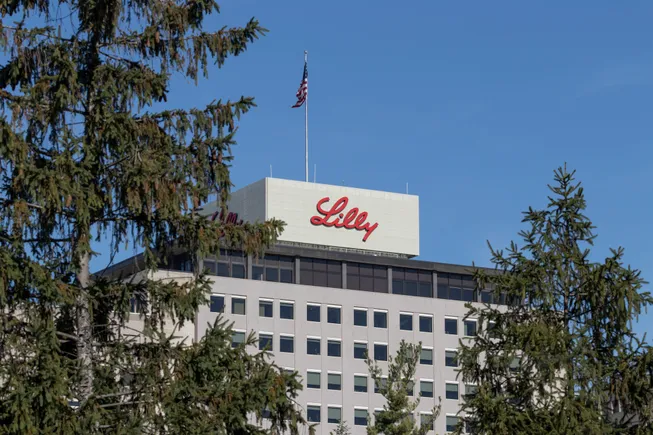
For any hopes the dealmaking that started the J.P. Morgan Healthcare Conference would give the overall biotechnology sector a running start to 2025, Eli Lilly deflated them Tuesday.
The company, which rose to new heights on the success of its medicines for weight loss and diabetes, revealed revenue numbers that for the second time in a row fell short of investor expectations. Lilly shares fell 7% and dragged with them the stocks of several other obesity drug developers. A biotech stock index slid by almost 3%.
Amgen is one of those would-be competitors and, at the JPM meeting, executives defended recent trial results for the company’s rival weight loss drug. Read on for details on that and other highlights from the conference:
Amgen’s MariTide defense
Amgen’s market value rose and fell by billions of dollars last year on the promise of an obesity drug called MariTide. The drug, which is meant to act quicker and be dosed less frequently than existing medicines, dominated earnings call discussions.
But summary results from a Phase 2 trial failed to convince Wall Street that MariTide is clearly better than other drugs, leading analysts to question not only MariTide’s potential, but the optimistic picture Amgen leaders had painted before disclosing data.
At a discussion with reporters Tuesday, a group of Amgen executives defended MariTide’s profile as well as the way in which the company presented results. “We don’t hype data. This is a differentiated medicine,” said Peter Griffith, Amgen’s chief financial officer.
Griffith attributed some of the especially large share price decline that hit Amgen afterwards to trading behavior amplifying the stock’s initial drop. He also pointed to data suggesting MariTide resulted in comparable weight loss to existing medicines at an earlier time point, and may be able to be administered once per month or less.
“How many of our peers in this industry have been searching for something once a month in Type 2 diabetes?” Griffith said.
While investors may stay skeptical, Amgen is advancing. It’s initiating late-stage studies in obesity, heart failure, sleep disorders and kidney disease, aiming to better negotiate with insurers, said Susan Sweeney, Amgen’s head for obesity and related conditions.
“I think MariTide will differentiate itself not only on the profile — that we are a different product than the weeklies, which seem to be more similar to each other than not — but also in the investment that we’re putting behind it,” Sweeney said.
A lot of eyes will be on the full Phase 2 study results coming this year. Executives confirmed they’ll be presented at a medical meeting — they didn’t say which — and will include findings from a different dose escalation scheme it’s working on as well. — Ben Fidler
Merck’s patent “hill”
Keytruda likely earned Merck & Co. something close to $29 billion last year. The dominant cancer immunotherapy, which accounts for a little less than half of Merck’s sales, is patent protected in the U.S. until 2028.
But to hear Merck CEO Rob Davis tell it, the looming expiration of Keytruda’s patent protection will be more of “a hill, not a cliff.”
In a presentation Monday afternoon, Davis said Merck was planning to offset Keytruda’s loss of exclusivity by moving up plans to file for approval and launch a subcutaneous version of Keytruda by the end of 2025.
“We expect to be able to see adoption of about 30% to 40% of all Keytruda [patients] into subcutaneous pembrolizumab,” Davis said. He expects many of these conversions will come from people taking Keytruda on its own, or in combination with oral drugs.
“We’re going to price to drive the adoption, so you should assume that and the price will evolve over time,” Davis said.
Executives at Bristol Myers Squibb, which is pursuing a similar subcutaneous strategy for its competing immunotherapy Opdivo, expect a similar rate of conversion to their subcutaneous product, which won U.S. approval last month.
Merck also hopes to close the future gap from loss of Keytruda sales with its pipeline of antibody-drug conjugates, sales of its Gardasil vaccine in China and the possible introduction of an oral weight loss therapy.
“I feel very confident that we have derisked that outcome,” Davis said. — Gwendolyn Wu
Dual-track dealmaking
GSK’s buyout of IDRx and Eli Lilly’s deal for Scorpion Therapeutics — both announced Monday — fit what’s been a trend the past year: privately held companies opting for a deal over an initial public offering.
According to Alexis Borisy, a venture capitalist at Curie.Bio, founder of IDRx and a board observer at Scorpion Therapeutics, both companies had confidentially filed paperwork outlining plans to go public. Neither got to the point of sharing those plans more widely, as both were running a “dual M&A/IPO process,” he said, and ultimately chose to sell.
To Borisy, these deals highlight the tough decisions facing IPO-ready startups. IDRx could’ve gone public, since it has a promising drug in early testing for gastrointestinal cancer, he said. But it likely would not have gotten much higher of a valuation than it received in an August funding round. The company would’ve had to sell about one-third of its shares to raise a couple hundred million dollars in an IPO, and risk its market value eroding after, he said.
Instead, GSK offered $1 billion upfront for the whole company — compelling enough for investors to earn returns, as well as for IDRx founders and employees to do well. IDRx’s drug will now move forward with a company that can easily fund future development. (Scorpion’s lead drug, meanwhile, was acquired by Eli Lilly for a slightly larger upfront sum.)
Those calculations are “a direct factor of the market at the moment,” Borisy said. “Both IDRx and Scorpion are companies that, if [this were] a booming public market, maybe would become public.”
“But in a ‘meh,’ market,” he added, “if somebody puts an attractive bid in, investors hit that bid.” — Ben Fidler
Viking looks long term
Viking Therapeutics, a developer of drugs for obesity, aims to compete in a market now dominated by big pharma. As such, analysts have thought it likely the company may look to license its drug or sell entirely.
Company CEO Brian Lian isn’t about to say who he’s talking with, but in a presentation Monday he did outline what characteristics would make for an ideal partner.
“Given the size of the obesity market, you would want a partner that has some experience in these large metabolic indications, you know, like a lipid background, or experience with diabetes,” he said. “We would prefer a global partnership. That would be probably the best.”
On-market competitors like Eli Lilly and Novo Nordisk have struggled to deliver enough of their obesity drugs to meet demand. On Monday, Lian sought to assure investors Viking is planning ahead on manufacturing. He said the company has enough supply of the subcutaneous formulation of its lead product, VK2735, to complete Phase 3 testing, and enough of the oral formulation to get through Phase 2.
“We’ve been working really hard to reach a long-term supply agreement that hopefully would include fill and finish for [subcutaneous] and tablet [formulations],” he said. “We’re making a lot of progress. It’s too early to make any announcements, but I think we should be in a position in the reasonably near term to update what our supply picture looks like.” — Jonathan Gardner