
Australians Could Slash Their Power Bills by 90% – But Will They?
4 min read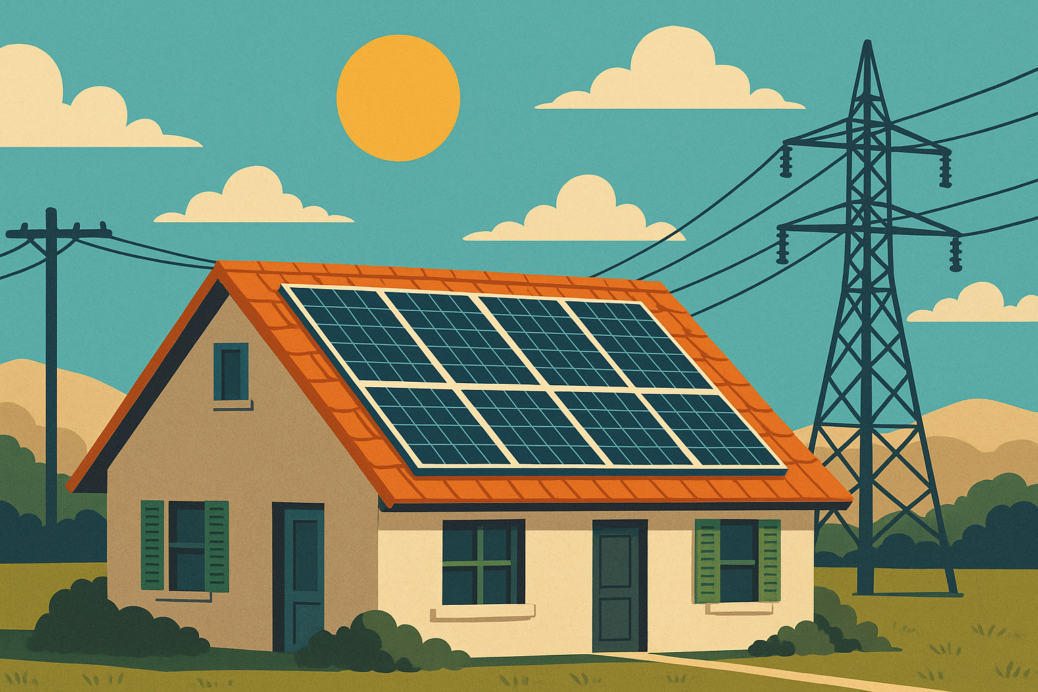
Key takeaways
Households could slash annual energy bills from ~$3,000 to $300 by fully electrifying their homes—installing rooftop solar, electric appliances, electric vehicles (EVs), and improving insulation.
That’s a $2,700 annual saving, with added benefits of resilience to energy price hikes and potential blackouts.
If you could cut your power bills by 90%, would you?
A new report by Rewiring Australia, reported in the Guardian, says that’s exactly what’s possible for the average Australian household, if we fully embrace energy efficiency and electrification.
But while the numbers are promising, the real challenge lies in making it happen.
Let’s look at the opportunity, the obstacles, and what this could mean for Aussie homeowners and investors.
The $3,000-a-year question
According to the Household Electrification Survey by Rewiring Australia, if households took a comprehensive approach, installing solar panels, switching to electric vehicles, electrifying heating and cooking, and retrofitting homes for energy efficiency, they could reduce their annual energy bills from about $3,000 to just $300.
No -that’s not a typo. A 90% reduction. And the benefits don’t stop there.
The report suggests that fully electrified homes powered by rooftop solar are not only cheaper to run, they’re also more resilient in the face of future energy price hikes and grid instability.
But here’s the rub: the average cost to electrify everything in the home and garage? Around $40,000.
Clearly that’s a significant upfront investment, especially in a time when cost-of-living pressures are biting.
The long-term payoff is undeniable
Rewiring Australia’s co-founder Dr Saul Griffith puts it like this:
“If we act now, we can save money, slash emissions, and improve the comfort of our homes.”
It’s hard to argue with the math.
The report estimates that over 10 years, fully electrified households could save over $20,000 in energy and fuel costs, even after repaying the initial $40,000 investment through low-interest green loans.

Note: But here’s the catch: most households don’t have the $40,000 cash, and many still see electrification as a complex or risky move.
So the real question becomes: how do we unlock this opportunity for the masses?
Policy needs to catch up with the potential
The report calls on governments to roll out more generous subsidies, better finance options (like zero-interest green loans), and stricter minimum energy performance standards for rental properties.
This isn’t just about saving money. It’s about achieving Australia’s emission reduction goals.
Fully electrified homes with solar and EVs can cut household carbon emissions by 70–80%.
That’s a game-changer.
For landlords, this presents a clear opportunity, and risk.
If minimum energy standards are introduced, rental properties that aren’t upgraded could become obsolete or command lower rents.
On the other hand, energy-efficient rentals could become a strong point of differentiation in a competitive market, particularly for long-term tenants concerned about bills.
Property investors: here’s what you should be thinking about
As an investor, you can’t ignore the writing on the wall.
The push toward energy-efficient homes isn’t going away.
In fact, it’s accelerating.
We’ve already seen green credentials become a selling point in the prestige market, but we’re now approaching a tipping point where energy efficiency will become a baseline expectation, not a bonus feature.
That means smart investors should be:
-
Auditing their current portfolio to assess insulation, heating, cooling, and appliance efficiency.
-
Factoring in electrification costs when undertaking renovations or value-adding projects.
-
Exploring finance options (such as NAB’s green loans or state-based rebates).
-
Positioning properties as low-cost, high-comfort rentals—which could reduce vacancies and increase tenant loyalty.
Electrification as a wealth strategy
There’s a broader play here, too.
Energy bills are one of the few household expenses that you can virtually eliminate with a one-time capital investment.
That makes energy efficiency not just a sustainability strategy, but a cashflow strategy.
Imagine the cumulative effect of freeing up $2,500+ per year, per property, across a portfolio of 5, 10, or 15 homes.
That’s tens of thousands of dollars each year that could be redirected toward paying down debt, growing your portfolio, or simply boosting your financial buffer.
It also makes your portfolio more resilient to future shocks, whether that’s a spike in grid power prices, new government regulation, or rising tenant expectations.
Final thoughts
Australians have an opportunity to take control of their energy future.
The benefits of household electrification seem clear, quantifiable, and economically compelling.
But to make this shift en masse, we need:
And as property owners and investors, we need to lead, not lag.
Because the energy-efficient, solar-powered, all-electric home isn’t a pipe dream, it’s fast becoming the new standard.