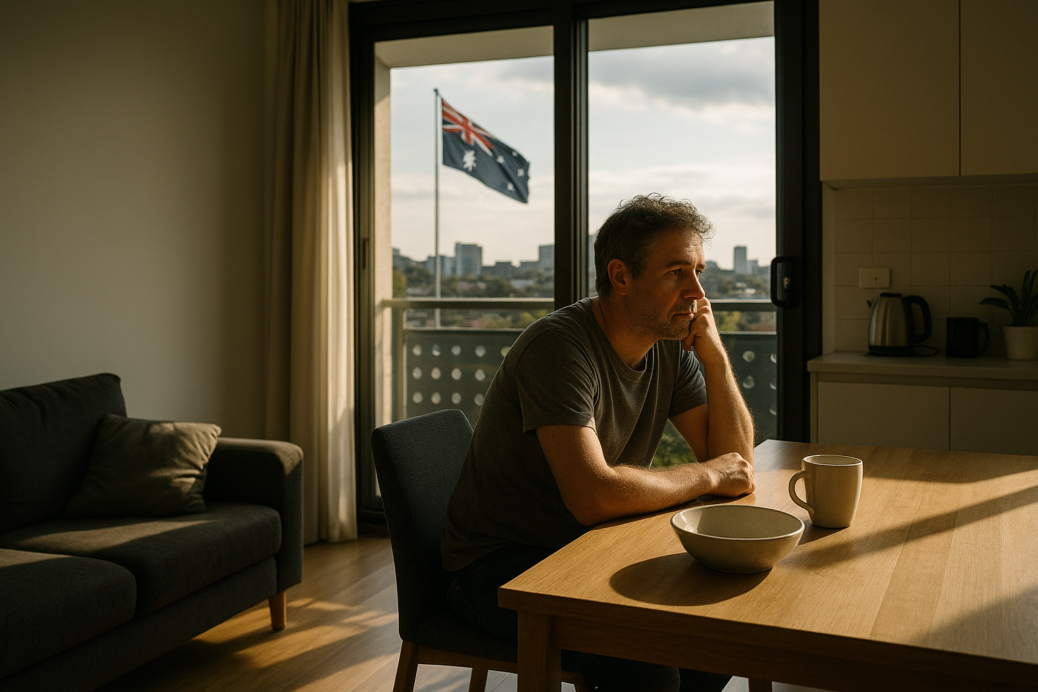
The Housing Revolution That Could Change Gen Z’s Gloomy Outlook
6 min read
Key takeaways
Gen Z is the smallest generation in decades, entering the workforce in a period of low unemployment.
Employers are competing for staff, giving young workers bargaining power for higher wages and better conditions.
Over the next 10–15 years, baby boomers will leave their large family homes, many in desirable middle-ring suburbs.
These properties will often be redeveloped into townhouses, increasing housing supply in well-located areas.
If current demographic trends hold, Gen Z may find housing more accessible, wages stronger, and opportunities broader than expected.
Compared globally, Australia remains stable, well-managed, and desirable—making its young people some of the “luckiest” in the world.
Right now if you talk to many young Australians, particularly Gen Z, you’ll hear a common refrain: “I’ll never own a home.”
They feel locked out of the market.
Prices have surged far beyond what their parents paid, yet wages haven’t kept pace, and every time they scroll social media, they’re bombarded with reminders of what they don’t have, as TikTok and Instagram parade images of peers living picture-perfect lives.
It’s no surprise then, as demographer Simon Kuestenmacher points out in our latest Demographic Decoded episode, “This is the most pessimistic, misanthropic generation out there to ever walk the Australian continent.”
Gen Z (born between 2000 and 2017) are also the first generation to grow up with smartphones in their formative years.
Global news, climate anxiety, lifestyle comparisons, and relentless beauty standards have been part of their everyday mental diet.
The data is clear: mental health concerns, especially among young women, are at record highs.
And for young men, rising suicide rates suggest we’re simply under-diagnosing the problem.
Add to that the seemingly impossible dream of home ownership, and you get a generation feeling deeply disheartened.
But here’s the thing: while their pessimism is understandable, the outlook for Gen Z’s housing prospects over the next decade might actually be brighter than they think.
In fact, a series of demographic, economic, and societal shifts could swing things in their favour, if they know how to position themselves.
For weekly insights subscribe to the Demographics Decoded podcast, where we will continue to explore these trends and their implications in greater detail.
Subscribe now on your favourite Podcast player:
A Small Generation with Big Opportunities in the Job Market
One of Gen Z’s secret advantages? There just aren’t that many of them.
They’re the children of Gen X, a small generation born in the 1960s and 1970s, when the contraceptive pill and shifting cultural norms kept birth rates low.
And a smaller generation means less competition, especially in the labour market.
“Gen Z is entering the workforce at a time when employers are desperate for staff,” says Simon. “They can ask for higher wages, better working conditions… that’s a good starting point for your career.”
They’re launching into their working lives in a period of historically low unemployment.
And the demographic math is on their side: as baby boomers retire in droves over the next decade, jobs will keep opening up.
Even if Gen Z won’t be stepping straight into those senior positions, they’ll benefit from the “trickle-down effect”: Gen X moves up, millennials take middle management, and Gen Z steps into the junior roles that open up.
Crucially, they’ll be starting on higher wages than previous generations – meaning their lifetime earnings potential is stronger.
The Baby Boomer Property Shift
There’s another demographic change coming, this time in property ownership.
Over the next 10-15 years, baby boomers will start exiting their family homes at scale.
It’s a sensitive subject, but it’s an inevitable reality: as they downsize, move into care, or pass away, a huge amount of property will hit the market.
“Those prime homes will often be redeveloped into multiple townhouses, increasing supply in highly desirable areas,” Simon explains.
That’s going to trigger a ripple effect:
- Millennials, who have been pushed to the urban fringe for family housing, will move into these well-located middle-ring suburbs.
- Gen Z will then find more affordable housing options opening up on the fringe, right as they’re reaching the stage of starting families.
It’s not that houses will suddenly become “cheap” in nominal terms, but proportionally, relative to incomes, they may become more accessible than they are today.
The Gender Pay Gap May Disappear
Another quiet revolution is underway.
For Australians under 50 (excluding parents), the gender pay gap is already non-existent.
Women are now outperforming men at every level of education and increasingly out-earning their male peers.
As Simon notes, this is likely to reshape family economics:
“More and more women will be the higher-income earner in a household. When it comes to returning to work after having children, the higher earner, often the woman, will return at a higher capacity. That closes the gap completely.”
The effect? More dual-income households with strong borrowing capacity, a major plus for Gen Z’s entry into the property market.
Policy Change: The Double-Edged Sword
Of course, policy will also play a role.
But Simon is blunt about the measures that won’t work:
“First home buyer grants only drive up house prices. We’re wasting public money to push up values, harming the very people the policy is meant to help.”
That’s because sellers and the market quickly adjust, absorbing the extra purchasing power into higher prices.
The result? Buyers don’t get ahead, except those already on the property ladder, whose assets just went up in value.
Instead, Simon calls for reforms that would genuinely improve affordability:
- Tax reform: Shift away from heavy reliance on income tax (currently over 50% of federal revenue) towards consumption taxes like GST, or land taxes that can’t be hidden or avoided.
- Skilled migration: Prioritise visas for trades and construction to address housing supply bottlenecks.
- Education reform: Make TAFE free to boost the supply of tradies who can build the homes and infrastructure we desperately need.
Innovation in How We Build
There’s also a huge opportunity in changing how we build homes.
Australia’s residential construction methods haven’t significantly changed in a century.
Productivity has barely improved. Prefabricated and manufactured housing could slash build times and costs, yet uptake remains minimal.
Simon is puzzled: “I’m surprised we haven’t seen at least one crazy billionaire double down on housing construction innovation. The cost of building the box you live in should be going down, not up.”
And it’s not just construction costs.
Taxes and charges make up as much as half the cost of a new home in New South Wales, slightly less in other states.
State governments, heavily reliant on property-related taxes, are unlikely to willingly push down prices without finding new revenue streams.
A More Positive 2035?
If the demographic forces and some policy reforms align, Gen Z could find themselves in a very different position by the mid-2030s.
Simon hopes that in 10 years’ time they’ll be able to say: “It turns out it wasn’t all that bad after all. I managed to start my family, get into a home, it was a heavy lift, but not nearly as bad as I expected.”
They may even find their perspective shifting towards optimism as they raise families and enjoy the benefits of structural changes in the housing market.
The Bottom Line
Gen Z’s pessimism is understandable, but it’s not the whole story.
Demographic shifts, a smaller generation, stronger wages, the gradual turnover of housing stock, and potentially the end of the gender pay gap all point towards a brighter horizon.
Of course, these tailwinds won’t solve every challenge, and without courageous political reform, progress could be slower than it needs to be.
But compared to much of the world, Australia remains a stable, desirable, and opportunity-rich place to live.
As Simon reminds us: “Once again we are a lucky country, a desirable destination and I don’t see this changing.”
The message for Gen Z? Stay engaged, plan strategically, and position yourself to ride the wave of changes coming your way.
The next decade might just surprise you.
If you found this discussion helpful, don’t forget to subscribe to our podcast and share it with others who might benefit.
Subscribe now on your favourite Podcast player: